
22 Oct 2026 · Alex Cass, Aon
Staff turnover could be costing you £40m a year
Put a number on regrettable turnover. Even at the low estimate of half a salary per leaver, a 10,000-person firm losing 20% a year spends £40m.

Use your own employee data to show what neurodivergent colleagues experience, and run awareness sessions on specific conditions so managers see strengths, not extra work.
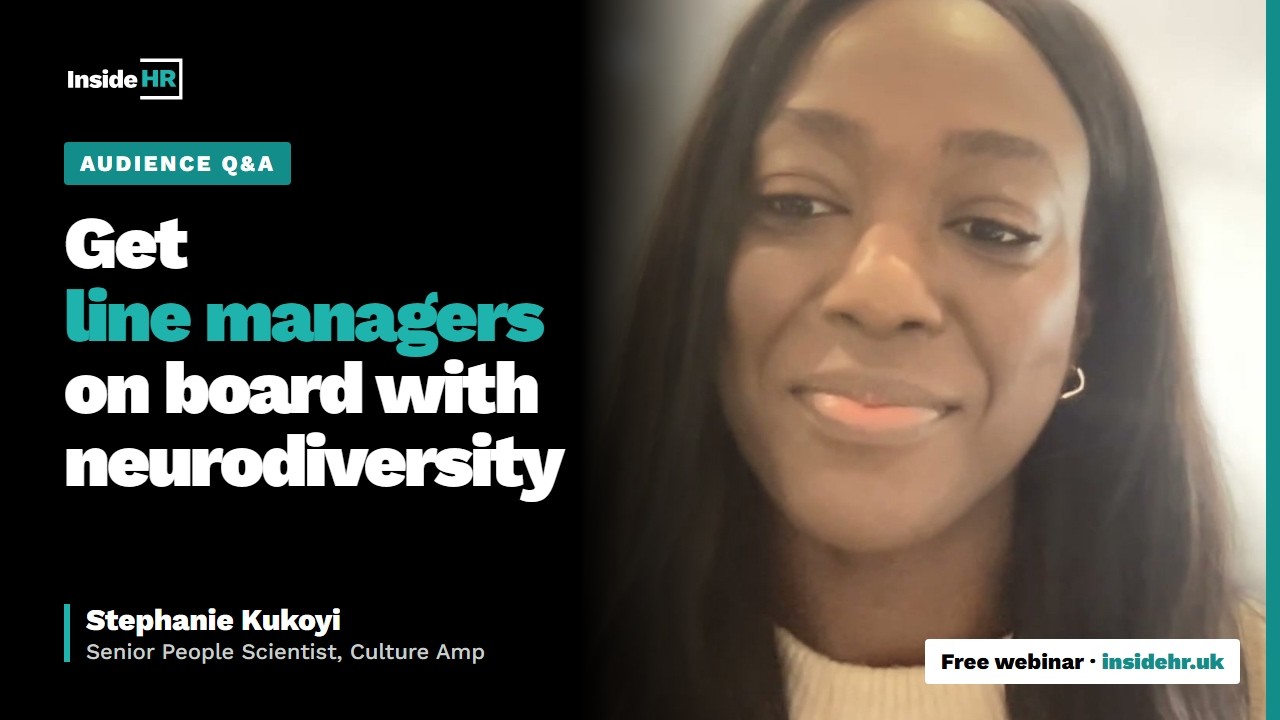
It is one of the most common questions HR teams bring to InsideHR webinars. The organisation is committed to a neurodiverse workforce, but line managers push back: "We need someone who fits the team, someone we don't have to do special things for."
An HR team put exactly that to Stephanie Kukoyi, Senior People Scientist at Culture Amp, during our webinar Neurodiversity: Creating an inclusive workplace. Her answer comes in two parts.
Generic business cases are easy for a sceptical manager to dismiss. Evidence from inside the organisation is not. If you have already surveyed employees, look at what your neurodivergent colleagues are actually experiencing and use that to open the conversation: "This is what is happening for people in our teams, now."
Broad "neurodiversity awareness" stays abstract. Sessions on individual conditions, such as autism, ADHD or dyslexia, let managers see the particular strengths each one can bring to a team.
The focus is often on difficulties, and that it's going to create more work for managers. But with simple changes, it isn't necessarily that burden.
It says here, as an HR team, we are very supportive and encouraging of creating a diverse workforce, including employees with neurodiverse conditions. However, our main challenge is in line manager buy-in. For the reason you touched upon, candidates being the right fit for their teams. That's a phrase I already said, we've heard a lot, and this is obviously the same for this team here. Do you have any guidance as to how we can best approach this barrier? So recruiting managers, line managers saying, look, I'm all for neurodiversity, but at the end of the day, we need someone that fits within our group, that fits within our team, that we don't have to do special things for and cater for. What's the best way to talk to those managers? I think the first thing that came to mind is around the use of data. So showing people the benefit of having that diversity of thought within a company or within a team can be really helpful, whether that's data you have internally. So you may have surveyed your population already, and you may be able to see what the experiences are of those neurodiverse employees. That is a really good way to start the conversation around, look, this is the experience, this is what's happening with our neurodiverse employees, let's start to build that buy-in, let's start to actually make it more inclusive within your teams as well. But also awareness sessions, having a session just as this, but maybe focusing on individual conditions, they can really highlight the strengths of having that kind of diversity within those teams as well. Because like I said, the focus is often on difficulties, and it's going to create more work for managers. But with simple changes, it isn't necessarily that burden that maybe people might just think it will be, but actually there's a lot of strength to creating those diverse teams.
Watch the full hour free, on demand.
New tip every week. Get InsideHR webinar alerts →
Put a number on regrettable turnover. Even at the low estimate of half a salary per leaver, a 10,000-person firm losing 20% a year spends £40m.

Unless the job involves presenting, an interview presentation tests the wrong thing. Test the work itself instead.
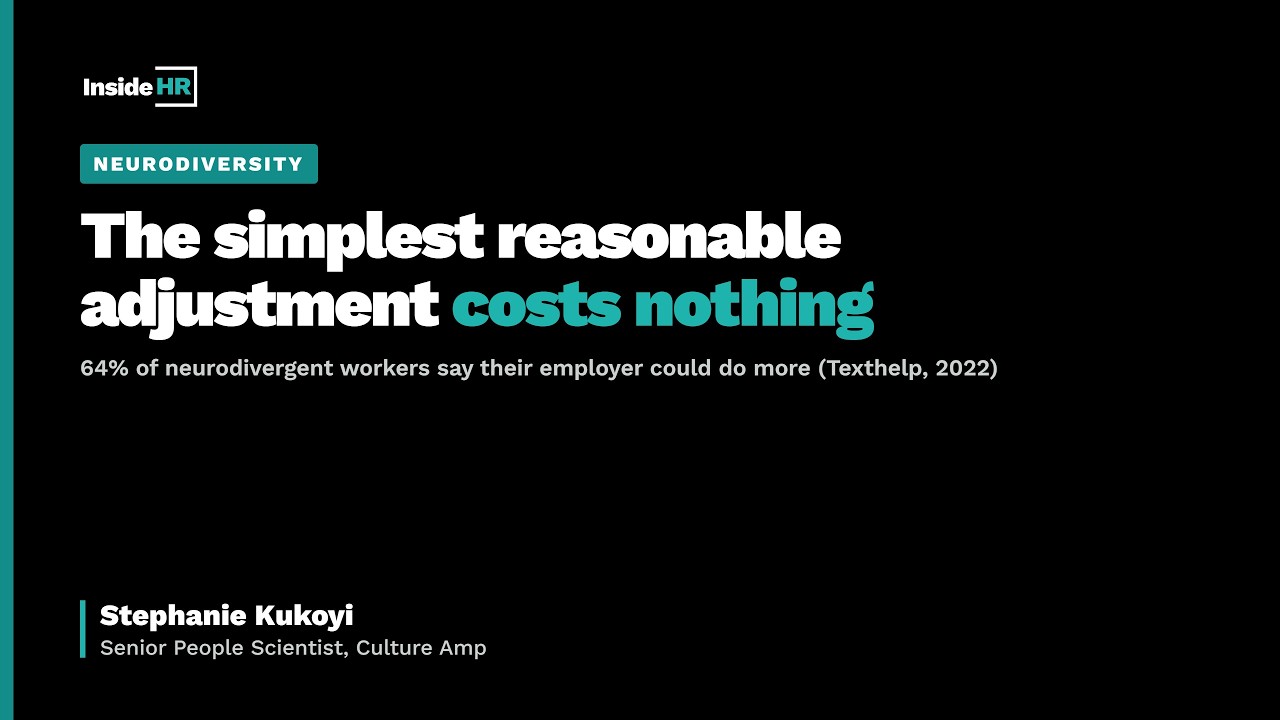
Many adjustments for neurodivergent colleagues are simple and free, such as sending the agenda before a meeting. The key is agreeing them with the person.