22 Oct 2026 · Jennifer Liston-Smith, Bright Horizons
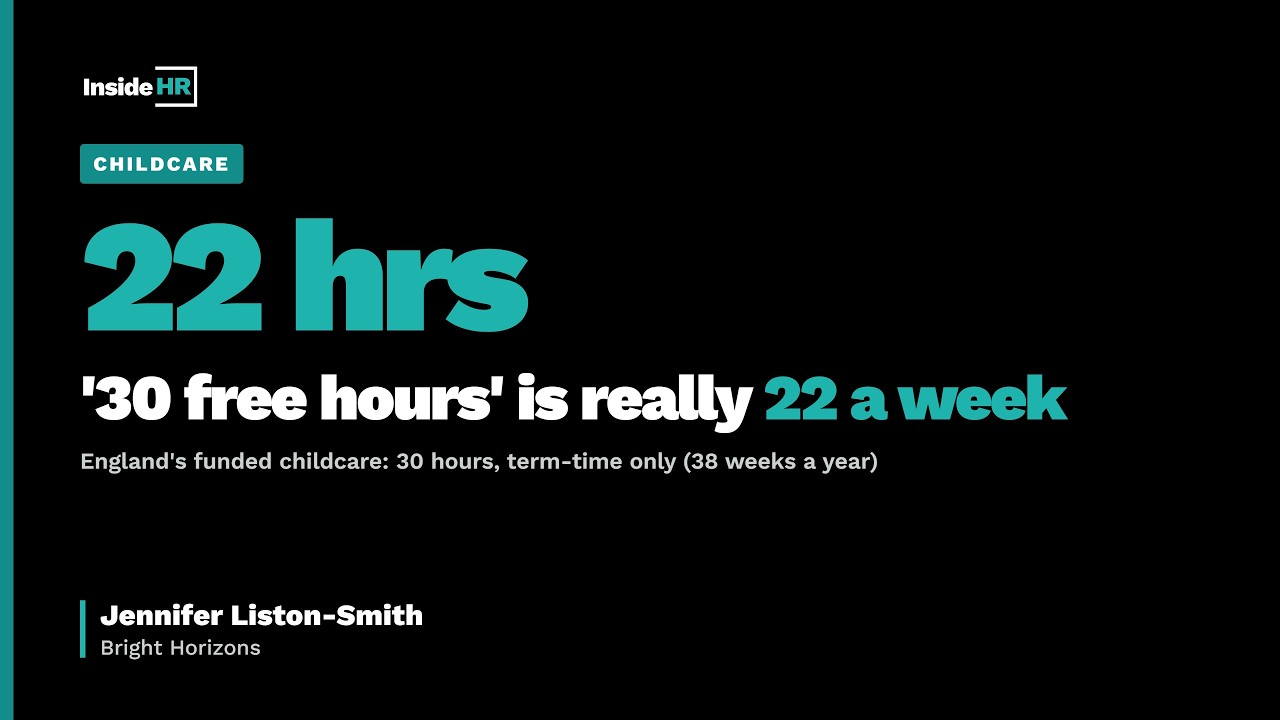
’30 free hours’ of childcare is really 22 a week
Funded childcare runs for 38 weeks a year. Averaged over the year it covers around 22 hours a week, not full-time work.

This InsideHR session looked at how employers can support employees' family lives beyond childcare, from new parents through to carers of adults, and how to benchmark that support. Host James Marsh was joined by Carrie-Ann Odlum, People Operations Leader at law firm RPC, Leah Gray, Benefits Manager at Marsh McLennan, and Jennifer Liston-Smith of Bright Horizons.
Carrie-Ann Odlum, People Operations Leader, RPC; Leah Gray, Benefits Manager, Marsh McLennan; Jennifer Liston-Smith, Bright Horizons. Hosted by James Marsh, HRreview.
Gray described family as including ageing parents and siblings as well as children. Marsh McLennan gives each colleague 15 days of backup care for children or adult dependants, but over 90% has always gone on childcare. So Gray runs reminders at least once a year, timed before the school holidays, and points out that adult care can also help colleagues recovering at home after their own operation.
Gray's group sessions for expecting and returning parents, in cohorts of 12 to 15, focus on worries such as whether the job will still be there. The cohorts then become support networks. At RPC, Odlum offers three one-to-one sessions for both the parent and the manager, plus a manager toolkit, and 65% of participants said they felt better equipped to manage their careers alongside family.
Liston-Smith said parental coaching, manager training and toolkits tend to lift maternity return rates by 12 to 14 percentage points above a national average of about 77%. The Bright Horizons benchmark sets out how to calculate the saving, which Liston-Smith put at perhaps £150,000 in a firm of 1,000 people. Record your absence levels before introducing backup care too, because Liston-Smith said they fall once it is in place.
Marsh McLennan is made up of four businesses with different policies and providers, so Gray first benchmarked them against each other to agree one best practice. Only then did the firm compare itself with competitors. Both Gray and Odlum also use staff surveys, networks and forums to shape what they offer. Bright Horizons' Parental Leave and Family Support Benchmark, built from more than 500 HR leaders, ranks provision as basics, core offerings or competitive edge.
Liston-Smith said equal leave, offered regardless of a parent's role in the family and separate from shared parental leave, is growing fast in the benchmark. Even a modest offer of six weeks boosts paternity leave and makes the policy inclusive. Liston-Smith noted that fathers back at work after two weeks with little sleep are often among the most disengaged employees.
Odlum said a supportive manager costs nothing and matters more than any benefit budget. Gray called Marsh McLennan's roughly 3,000 UK line managers a potential 'postcode lottery', so Gray gives them free crib sheets with conversation starters. Volunteer-run parent and carer networks, awareness days such as National Work Life Week and free webinars all cost little.
Funded childcare runs for 38 weeks a year. Averaged over the year it covers around 22 hours a week, not full-time work.

Parental leave coaching, manager training and toolkits tend to lift maternity return rates by 12 to 14 points, from about 77%.
Stay for the Q&A, where the panel covers how employers are filling the gaps left by government-funded childcare hours, Gray's route to assessing neurodivergent conditions, and how many days of backup care to offer so people actually use it.
Never miss the next one. Get InsideHR webinar alerts →