
Sara Hill, CEO, RoleMapper
Pay transparency: why an above-range hire becomes a risk later
That hire you paid above the range to land quickly? Under pay transparency, it becomes much harder to explain.

Employ people in the EU? The EU Pay Transparency Directive is coming, and it asks a lot of employers.
Employ people in the EU? The EU Pay Transparency Directive is coming, and it asks a lot of employers.
In this clip, Sara Hill of RoleMapper sets out three things the Directive requires, and why UK organisations with EU staff should be paying attention now.
Worth a watch for HR, reward and payroll teams, and the finance leaders who sign off pay budgets.
And the EU Pay Transparency Directive is particularly brutal. It's the most robust example of where this is heading. So we follow this and we can see what's going to land in the UK. And it requires organisations to demonstrate that a role's value using objective and gender-neutral criteria. And it also requires organisations to publish pay ranges and progression criteria up front. And it requires organisations to report on groups of workers doing work of equal value. So even if you're not in the EU, this is heading our way.
Watch the full hour free, on demand.
Read the key takeaways from this webinar →
New tip every week. Get InsideHR webinar alerts →
That hire you paid above the range to land quickly? Under pay transparency, it becomes much harder to explain.
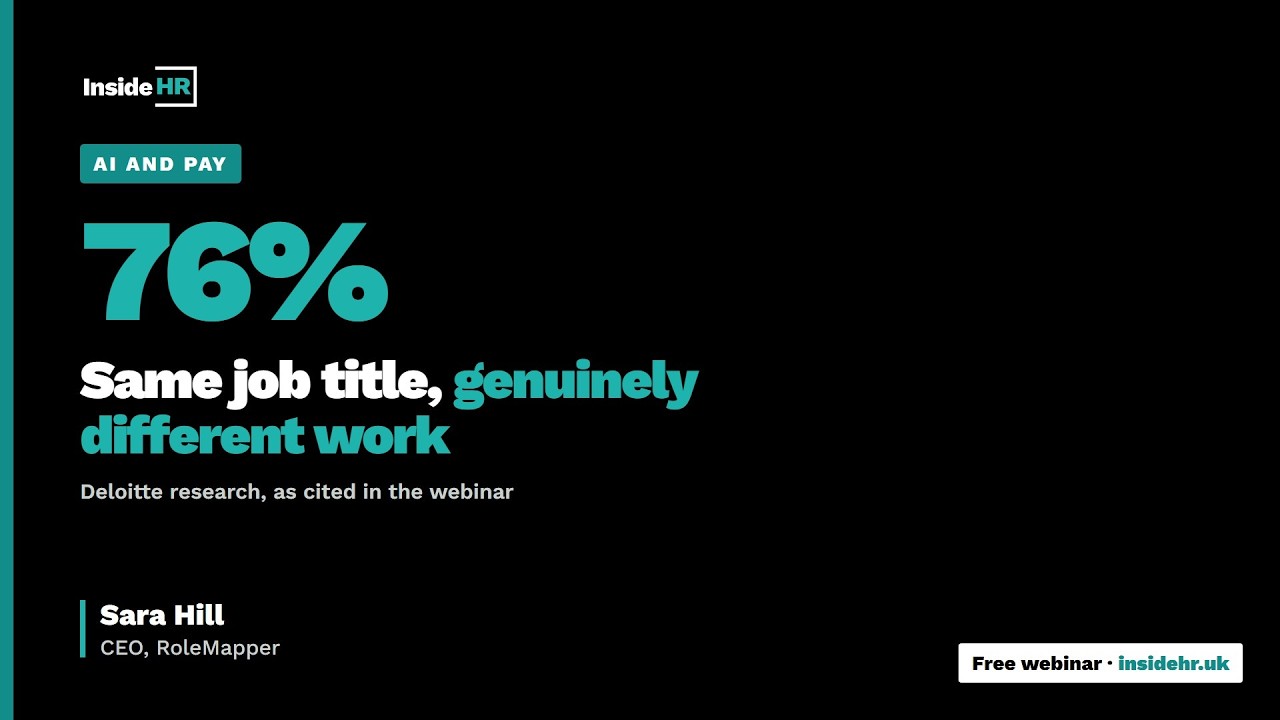
76% of people with the same job title are doing genuinely different work, according to Deloitte research cited in the webinar.

"It's the market rate" may no longer be enough to justify a pay difference.