22 Oct 2026 · Charlotte Mosley, Senior People Scientist, Culture Amp
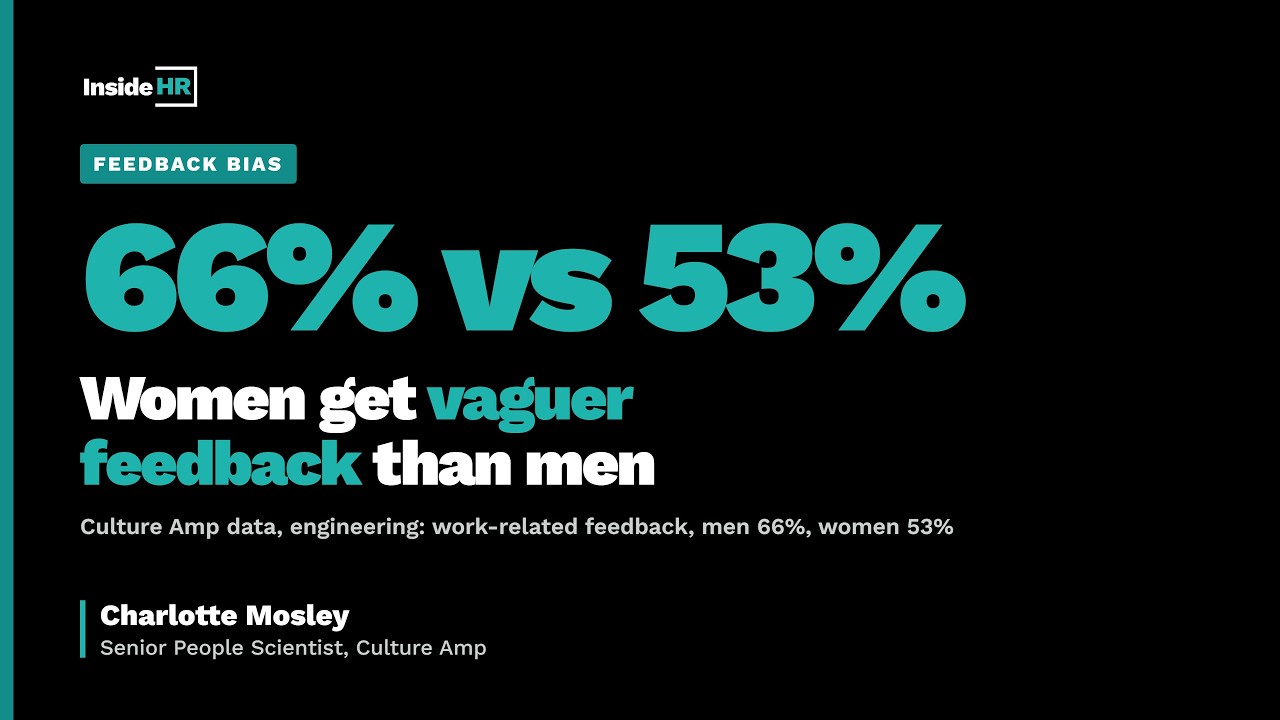
Women get vaguer feedback than men
Culture Amp data shows men get more specific, work-based feedback. A structured format such as SBI helps close the gap.

This session looked at why negative feedback is so hard to give and hear, and how to turn it into constructive feedback that drives growth and engagement. HRreview's James Marsh was joined by Charlotte Mosley, Senior People Scientist at Culture Amp.
Charlotte Mosley, Senior People Scientist, Culture Amp. Hosted by James Marsh, HRreview.
Mosley separates criticism, which condemns past behaviour, from constructive feedback, which looks forward. Good feedback names where the person is and where they need to be, describes what excellence looks like, and makes clear it is within their reach. Mosley cited a Harvard Business Review study finding that 57% of people prefer constructive feedback to praise, against 43% who prefer praise.
Managers often avoid development conversations with star performers in case it demotivates them. Mosley said Culture Amp's research consistently places learning and development among the top drivers of engagement and retention. Culture Amp's own data shows most employees leave a constructive conversation more committed, compared with fewer than 25% intending to stay after feedback that is purely critical.
Employees can be disappointed with feedback and still be motivated by it if they feel it was handled fairly and respectfully. Drawing on organisational justice theory, Mosley set out three tests: a clear, consistent process with no surprises and a chance for the employee to give input; respectful treatment throughout; and outcomes in line with what others receive. Culture Amp data shows over half of employees do not feel their performance is managed in a way that motivates them.
Culture Amp research found men tend to receive more specific, work-based feedback, while women are more likely to receive vague or personality-based comments, which are hard to act on. In engineering, Mosley said men received 66% work-related feedback against 53% for women. Replacing blank comment boxes with a structure such as situation, behaviour, impact (SBI) helps keep bias out.
Feedback should be regular enough that nothing comes as a surprise, and given soon after the behaviour but not when emotions are running high. Mosley recommended a growth mindset over a fixed 'you either perform or you don't' view. Start by stating the feedback is for improvement, give clear examples of current and desired behaviour, let the employee suggest solutions, agree what success looks like and book the next check-in.
Come from curiosity, not condemnation: swap questions starting with 'did', 'is' or 'will' for 'who', 'what' and 'how', and avoid leading wording. If you want to change a behaviour, state the result it is having, or flip it into a positive, such as asking someone to plan ahead so they arrive early rather than telling them to stop being late. Mosley stressed soft eye contact, relaxed posture, uncrossed arms and a gentle voice.
Culture Amp data shows men get more specific, work-based feedback. A structured format such as SBI helps close the gap.
The four-statement exercise, where the audience tries to spot what links the feedback before Mosley reveals the pattern, and the Q&A on handling an employee who dismisses appraisals as HR rubbish.
Never miss the next one. Get InsideHR webinar alerts →